
The Beanie Baby Craze: A Chicago Story of Innovation and Obsession
BeanieX Team · October 13, 2026
Explore the origins of Beanie Babies, the Chicago-based phenomenon that transformed the toy industry and captivated collectors worldwide, driven by Ty Warner's vision and strategic marketing.
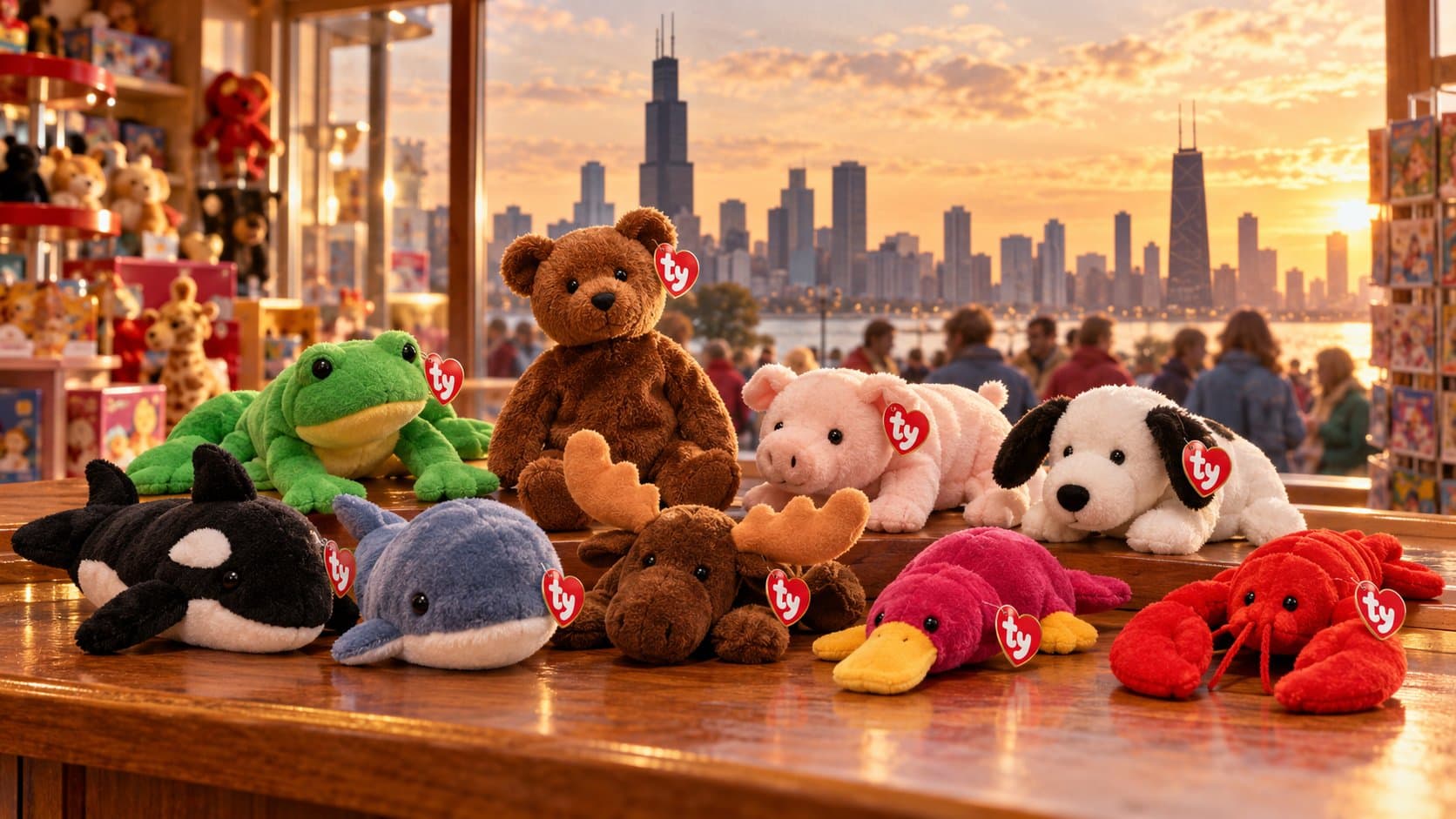
The Birth of a Phenomenon
Few toys have captured the hearts and imaginations of children and collectors alike quite like Beanie Babies. This seemingly simple line of plush toys, filled with plastic pellets and adorned with colorful tags, became a cultural sensation that swept across the globe in the 1990s. At the center of this phenomenon was Ty Warner, a Chicago-based entrepreneur whose vision and marketing acumen transformed a small toy company into a multi-billion-dollar empire.
The rise of Beanie Babies began in the heart of Chicago, where Ty Warner founded Ty Inc. in 1986. Warner's journey to success was not without its challenges. After dropping out of college, he ventured to Los Angeles to pursue acting but ultimately found his calling in the toy industry. His early experience at Dakin, a toy manufacturer, was pivotal; however, a bold attempt to sell his own designs led to his dismissal. This setback did not deter Warner; instead, it fueled his determination to create a unique product that would resonate with consumers.
Warner's vision was inspired by a trip to Italy, where he encountered plush cat toys that sparked his imagination. Upon returning to Chicago, he used his life savings to launch Ty Inc., initially focusing on producing plush cats. However, in 1992, a pivotal moment occurred when Lina Trivedi joined the company. As one of the earliest employees, she witnessed firsthand the evolution of the Beanie Baby line from its humble beginnings.
The Unique Appeal of Beanie Babies
The first Beanie Babies were not yet the beloved collectibles we know today. Initially, they were simply cute plush toys designed with a focus on quality and detail. The introduction of the “bean bag” design, which allowed the toys to be flexible and poseable, was a game-changer. This design effectively combined the aesthetics of traditional stuffed animals with a modern twist, appealing to children and parents alike.
The Emotional Connection
As market analyst Ross Benes pointed out, the mid-90s saw a surge of anthropomorphized toys that connected kids to nature and pets. However, Beanie Babies distinguished themselves by not only embodying playful designs but also creating an emotional bond with their owners. Each Beanie Baby was presented as a character with a unique name and backstory—an innovative marketing strategy that encouraged children to form attachments to their plush companions. The toys were also relatively affordable, typically retailing for around $5, making them accessible to a wide audience.
The Marketing Mastery of Ty Warner
Warner's marketing strategies played an essential role in the meteoric rise of Beanie Babies. His decision to limit production of certain models created an aura of scarcity, driving collectors into a frenzy and igniting a secondary market. The combination of rarity and desirability led many to view Beanie Babies as viable investments, often compared to stocks or bonds.
The Collector's Market
As the craze grew, collectors began to notice the potential for value appreciation. The rarest Beanie Babies could command staggering prices, with some selling for thousands of dollars. The community of collectors expanded rapidly, fueled by the internet and a growing network of enthusiasts who shared information and traded their prized possessions. The fervor surrounding Beanie Babies became a cultural phenomenon, with collectors attending conventions and forming clubs, all in pursuit of the next elusive plush prize.
The Impact of Beanie Babies on the Toy Industry
The Beanie Baby craze not only transformed the landscape of children's toys but also influenced other aspects of the toy industry. Warner's success prompted competitors to replicate the formula, leading to an influx of similar plush toys flooding the market. This overwhelming imitation, however, ultimately diluted the uniqueness of the original Beanie Babies, contributing to the decline of the craze as the late 90s approached.
The Rise and Fall
What once seemed like an unstoppable trend began to wane as consumer interest shifted towards new toys and fads. The very strategies that had propelled Beanie Babies to success—limited production and collector hype—began to backfire. As saturation occurred and the novelty wore off, many collectors found themselves left with a surplus of plush toys that no longer held the same value.
Legacy and Continued Appeal
Despite the decline in the late 90s, the legacy of Beanie Babies endures. The toys remain a nostalgic symbol of a bygone era of toy collecting, and many still cherish their collections. The Beanie Baby phenomenon also paved the way for future collectible toys, demonstrating the potent combination of innovative design and strategic marketing.
The Modern Collector's Perspective
For today's collectors, Beanie Babies represent more than just toys; they embody a unique cultural moment and a fascinating chapter in the history of toy marketing. The BeanieXchange community provides a platform for enthusiasts to connect, share stories, and authenticate their collections, ensuring that the spirit of Beanie Baby collecting continues to thrive in the digital age.
In conclusion, Beanie Babies are not merely stuffed toys; they are emblematic of a cultural phenomenon that originated in Chicago and captured the world’s imagination. Ty Warner’s unique vision and marketing strategies transformed a small toy company into a global sensation, leaving an indelible mark on the toy industry and the hearts of collectors everywhere. The story of Beanie Babies serves as a reminder of the power of innovation, nostalgia, and the enduring bond between children and their toys.
Based on reporting from the original article ↗.