
Rarity Guide
What makes a Beanie Baby valuable?
A practical, up-to-date guide for buyers and sellers on BeanieXchange.com — what to inspect, what categories of value actually exist in today's market, and which Beanies are worth the time to authenticate.
Key factors that determine rarity & value
Tag generations (most important)
1st – 3rd generation hang tags (1993 to early 1996) are the rarest and most valuable. Early tags have specific fonts, colours, and formats that mass-produced later versions don't share.
4th-generation and later tags were mass-produced — value drops sharply.
Both the hang tag (heart-shaped paper tag) and the tush tag (sewn-in fabric tag) should match generation-for-generation and be in good condition. A mismatched pair is one of the most common counterfeit markers.
Condition (critical)
Mint with tags (MWT) is the gold standard: never played with, tags intact and uncreased, no odours or stains, no fabric pilling.
Missing or damaged tags can cut value by 50 % or more — even on a rare Beanie.
Clean, smoke-free storage, no sun fade, and original pellet condition all matter.
Retirement status & production numbers
Early retired Beanies — especially the Original 9 of 1993 — are generally the most desirable mainstream pieces.
Limited editions, store exclusives (FAO Schwarz, Disney), and low-production runs carry a premium.
Regional exclusives (Maple in Canada, Britannia in the UK, Erin in Ireland) command higher prices than their US counterparts.
Tag errors
Minor spelling and printing mistakes do exist, but most do not dramatically increase value anymore — many were mass-produced with the same 'error.'
True rare errors on early-generation tags can add a real premium; later-gen 'errors' are usually noise.
Pellets / stuffing
Early PVC pellets vs later PE pellets matters to serious collectors — PVC is generally preferred for older pieces because it indicates an early production run.
Fill consistency, weight, and the feel of the plush also factor in for grading.
Rarity categories
| Tier | Price range | What it usually means |
|---|---|---|
| Common | $5 – $20 | Mass-produced, common colourways, late-generation tags. |
| Uncommon | $20 – $100 | Early retirements, mid-generation tags, mint condition. |
| Rare | $100 – $1,000+ | Low production, 1st–3rd gen tags, regional exclusives. |
| Ultra-Rare | $1,000 – tens of thousands | Colour variants, prototypes, recall errors, celebrity ties. |
Real top sales for pristine early pieces are strong but more modest than headline “million-dollar Beanie” clickbait would have you believe.
Most-valuable / notable Beanies in 2025–2026
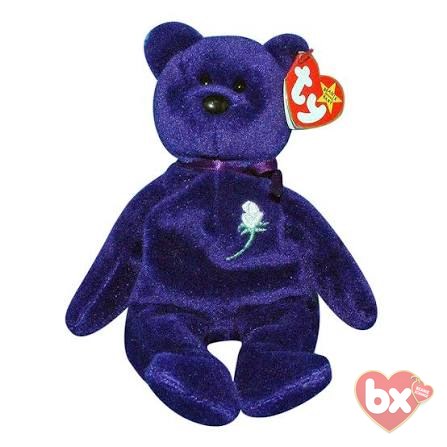
Princess
1997 Diana commemorative; PE-pellet variants in mint condition routinely clear $500+.
Peanut
The royal-blue colourway (1995) is one of the most-cited rare Beanies.
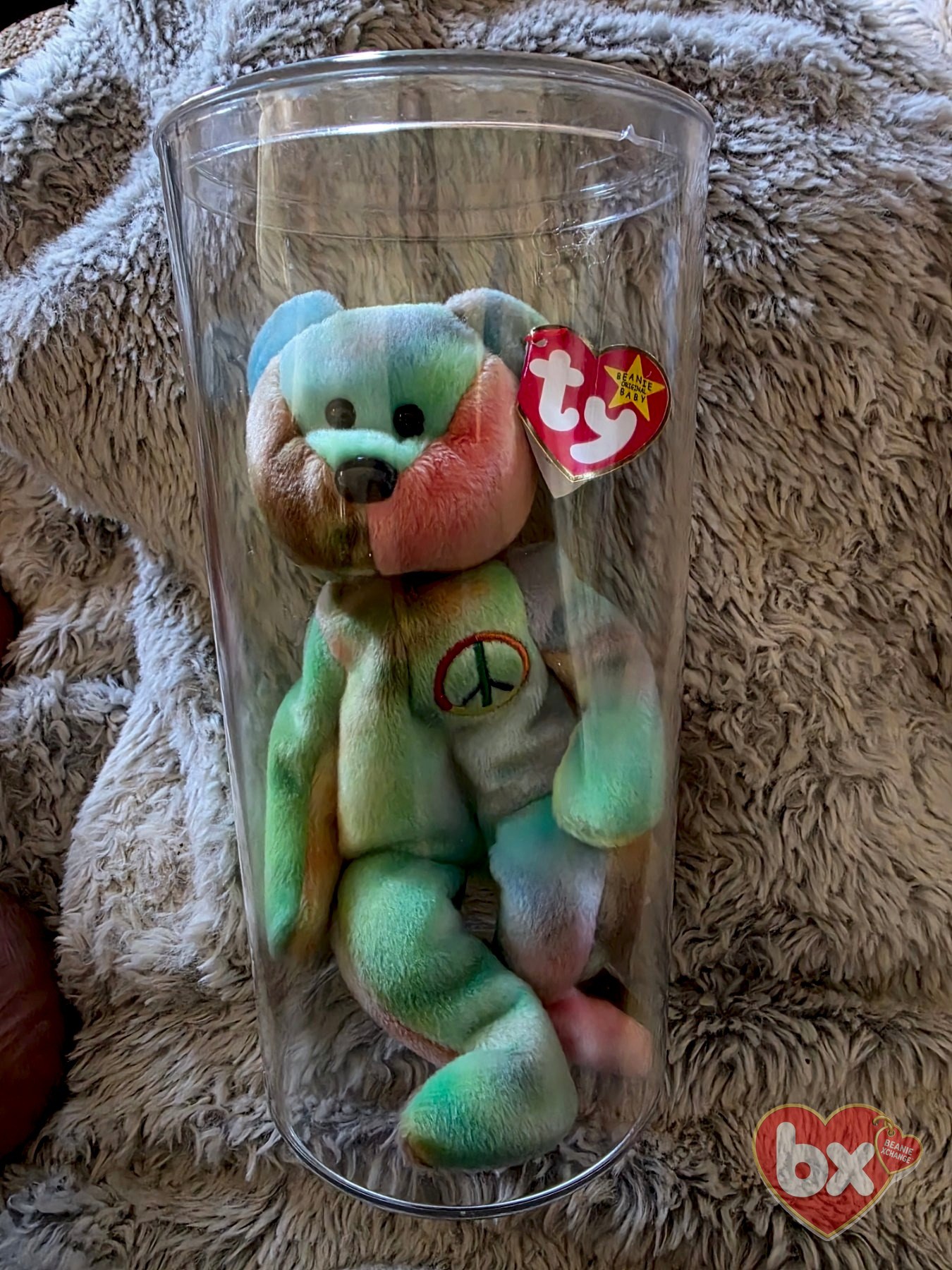
Peace
Tie-dye Peace Bear — a celebrated 1996 release, condition-sensitive.
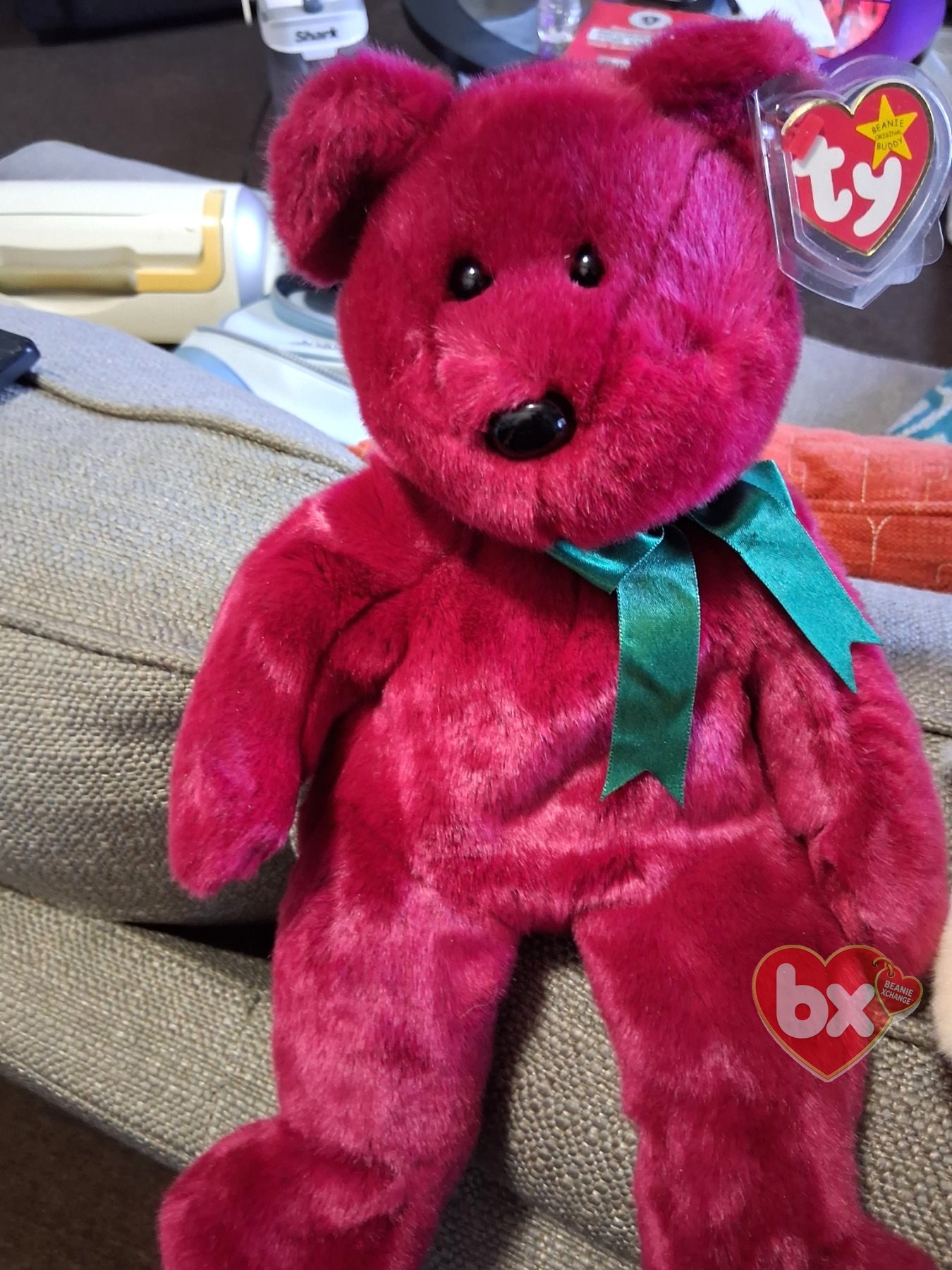
Valentino
White bear with red heart; clean tag generation 1–3 examples are sought.
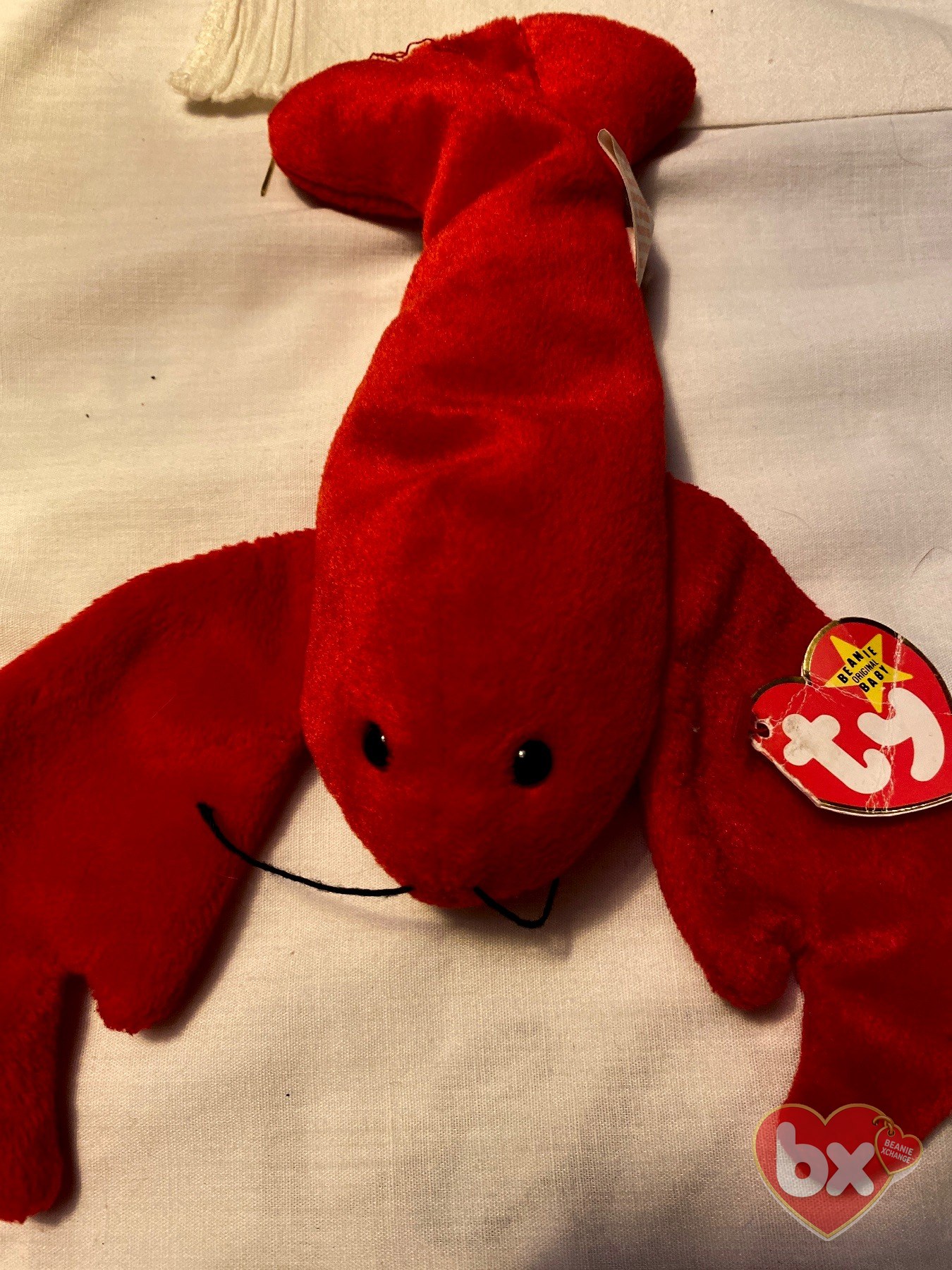
Pinchers
Original 9 (1993). 1st-gen tag + mint plush is a foundational collector piece.
Quick visual identification tips
- Check the heart tag font, colour, and Ty logo style against known generation references.
- Examine stitching quality, eye placement, and fabric texture for anomalies that suggest a counterfeit.
- Compare tush-tag details — copyright dates, country of origin, pellet type — to the hang-tag generation.
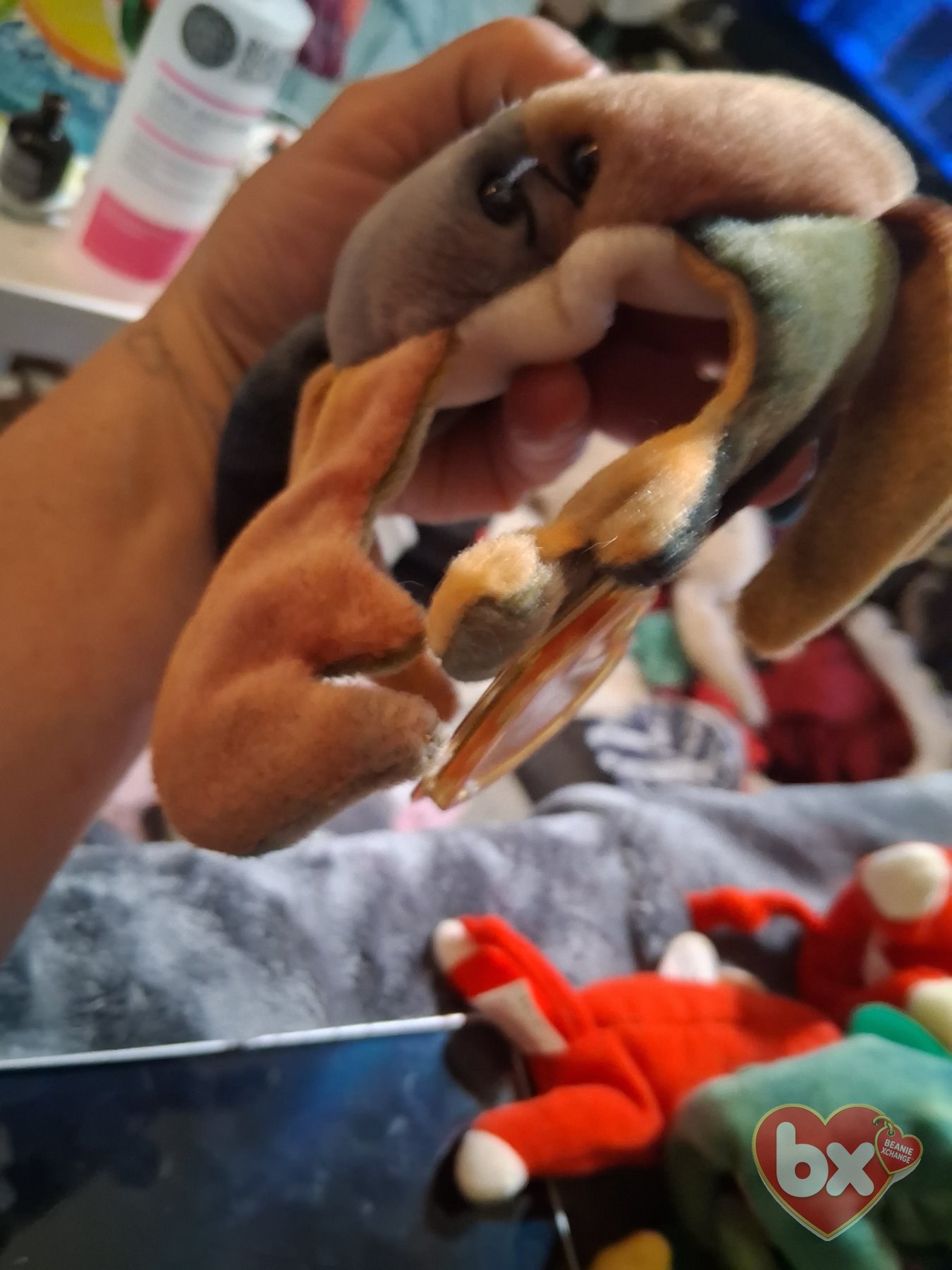
- Photograph high-value pieces from multiple angles, including close-ups of both tags and any unique markings, before listing.
When to authenticate
- Any Beanie you suspect is 1st–3rd generation
- Any regional exclusive (Maple, Britannia, Erin, Glory)
- Princess, Peace, Peanut, Valentino, Libearty
- Anything with a colour variant or recall history
- Anything you intend to list above $100
Tips for sellers
- Authenticate first if the Beanie could clear $100
- Photograph both tags in focus, close up
- Note the generation in your title (e.g. 3rd gen hang / 4th gen tush)
- Disclose any tag bend, fade, or odor — buyers will spot it
- Use Mint / Near-Mint / Excellent / Good consistently
How BeanieXchange uses this guide
- Browse filters let you narrow by authentication tier and listing recency.
- Listing pages surface the tag generation, condition rating, and Certificate of Authenticity number on every BX-authenticated piece.
- Seller wizard walks you through choosing the right authentication path before publishing so you get the highest possible resale price.
- BX Registry tracks every sealed, COA-attached Beanie — buyers and future owners can verify a registration number any time.