
How Do I Sell My Beanie Babies?
BeanieX Team · September 1, 2026
You found the box. Maybe it has been in a closet since the 1990s. Maybe it came from a parent, a grandparent, or an estate. Now you are wondering: How do I actually sell my Beanie Babies—and how do I know what they are worth?
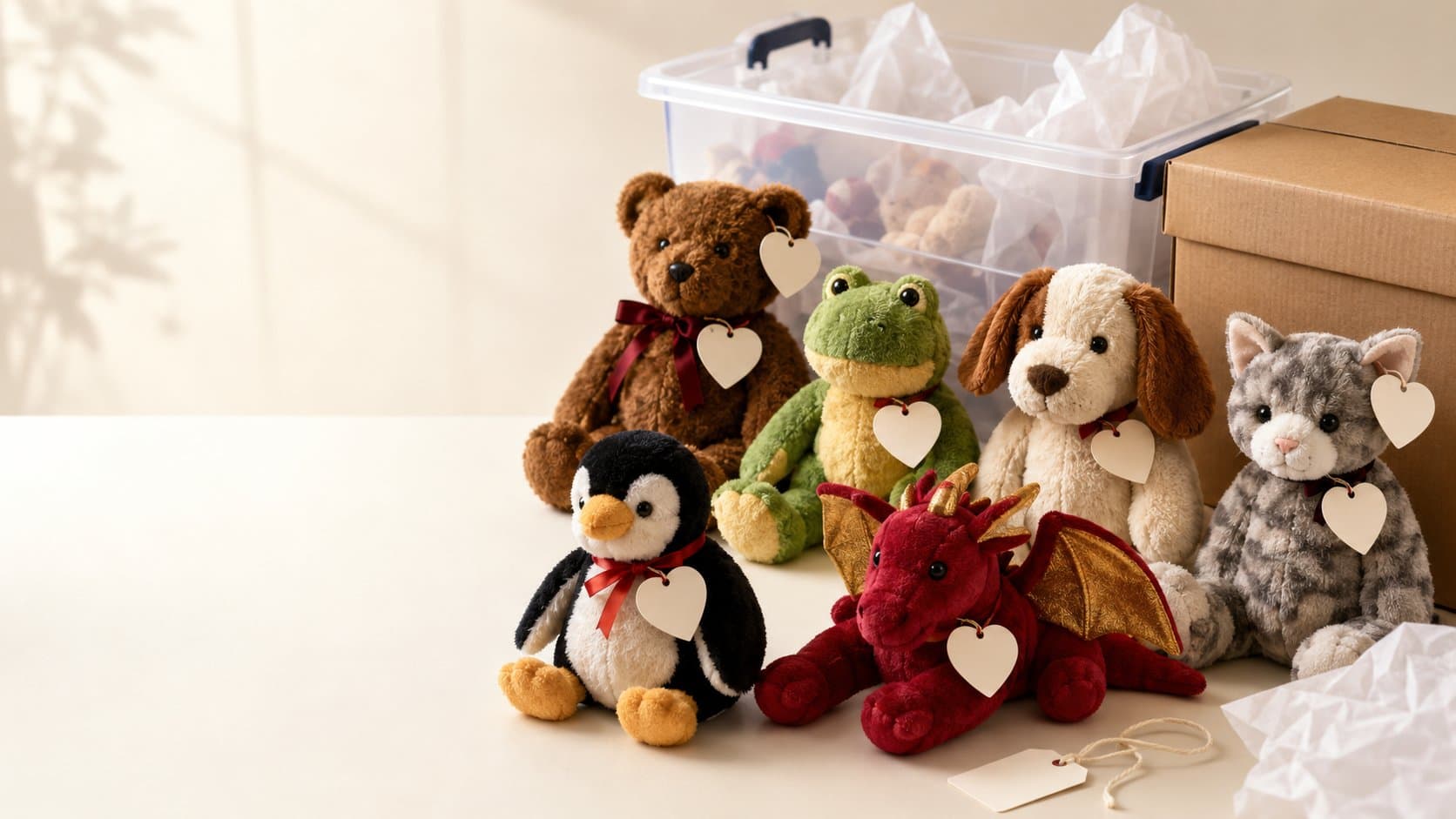
The short answer is simple: identify each Beanie Baby, evaluate its condition, research real sold prices, take clear photos, and choose whether to list it individually or in a group.
The more honest answer is that most Beanie Babies are not worth the thousands of dollars claimed in viral articles. But that does not mean your collection is worthless. Some pieces are genuinely desirable, and even common Beanie Babies can sell when they are priced, grouped, and presented well.
Here is how to do it without wasting hours listing a $5 Beanie—or accidentally selling a valuable one for $5.
- Sort the collection before researching prices
Start by making a few simple groups:
Beanie Babies with intact heart-shaped hang tags
Beanie Babies without hang tags
Miniature, oversized, special-edition, or unusual pieces
Sets, themed groups, and duplicates
Pieces with stains, odors, fading, holes, or other damage
Do not throw away damaged or tagless Beanie Babies yet. They may still be useful for completing a set or building an affordable collector lot. Sorting first simply makes the next steps much faster.
As you work, create a basic inventory with the name, animal, color, tag status, and any obvious distinguishing features. A phone note or spreadsheet is enough.
- Identify each Beanie Baby accurately
The name alone is not always enough. Different versions of the same character can have different tags, materials, colors, countries of manufacture, or production details.
Check both tags:
Hang tag: Look for the character name, birthday, poem, style number, and the design of the tag itself.
Tush tag: Look for copyright information, manufacturing details, pellet material, and country of manufacture.
Record what you can see, but do not guess at a tag generation or rare variation. If you are uncertain, photograph the tags clearly and let knowledgeable buyers evaluate them.
One important warning: minor spelling, punctuation, spacing, and tag differences are often normal production variations. An “error” does not automatically make a Beanie Baby rare or valuable.
- Evaluate condition honestly
Condition can have a major effect on collector value. Inspect the plush and both tags under good light.
Look for:
Creases, tears, fading, stickers, or writing on the hang tag
Fraying or fading on the tush tag
Stains, dust, discoloration, or worn fabric
Loose stitching, holes, repairs, or missing parts
Smoke, mildew, perfume, or pet odors
Flattened stuffing or misshapen bodies
Avoid calling an item “mint” unless it truly appears untouched. Phrases such as “excellent pre-owned condition” or “light crease on hang tag” are more useful to buyers—and safer for sellers—than exaggerated grades.
Do not wash a potentially valuable Beanie Baby before researching it. Cleaning can alter the fabric, shape, tags, or other details collectors care about. For ordinary pieces, gentle surface cleaning may be appropriate, but always disclose it.
- Research sold prices—not asking prices
This is the step that prevents most pricing mistakes.
Search for the exact character and compare listings with the same tag type, condition, variation, and authentication status. Then filter for completed or sold transactions whenever the marketplace provides that option.
Ignore:
Unsold listings with enormous asking prices
Viral “rare Beanie Babies worth a fortune” articles
Listings that look similar but have different tags or variations
A single unusually high or low sale with no supporting examples
Instead, look for a consistent range across several recent, comparable sales. Pay attention to whether shipping was included in the price.
If you cannot find an exact match, begin with the closest comparable version and price conservatively. You can always accept offers or adjust the price after seeing how buyers respond.
- Decide what to sell individually and what to group
Listing every Beanie Baby separately can produce the highest total return, but it also takes the most time. A mixed strategy is usually best.
Consider an individual listing when a Beanie Baby has:
Consistent sold prices that justify the extra work
An early tag, documented variation, or unusual design
Professional authentication
Excellent condition with clean, intact tags
Strong demand as part of a popular character line or limited release
Consider a group listing when you have:
Common later-production Beanie Babies
Tagless or gently played-with pieces
Multiple low-value duplicates
A complete theme, holiday group, animal group, or matching set
A large collection you value more for speed than maximum return
Curated lots usually perform better than a random box. “Six Halloween Beanie Babies” or “Lot of eight sea animals” gives a buyer a clear reason to want the entire group.
- Take photos that answer collectors’ questions
Good photos build trust and reduce returns. Use indirect daylight, a clean neutral background, and the highest-resolution camera available to you.
For an individual Beanie Baby, photograph:
The full front
The full back
Both sides
The hang tag cover
Every interior page of the hang tag
The front and back of the tush tag
Any variation, flaw, stain, crease, or repair
Do not use stock photos for the item itself. Buyers need to see the exact Beanie Baby they will receive. Avoid filters that change its color, and make sure the tag text is readable when the image is enlarged.
For a lot, include one clear group photo plus close-ups of every item and tag. Arrange the group so no character is hidden behind another.
- Write a specific, searchable listing
A useful title includes the details a collector is likely to search for:
Ty Beanie Baby + character name + animal + relevant version or tag detail + condition
Example:
Ty Beanie Baby Peace Bear Multicolor Plush With Hang Tag – Pre-Owned
Keep the description factual. Include:
Character name and animal
Approximate size
Hang-tag and tush-tag status
Any variation you can confidently identify
Complete condition notes
Odor or storage information, when relevant
Exactly what is included
Never hide a flaw in the wording or photos. A clearly disclosed crease is unlikely to surprise a buyer; an undisclosed crease can create a return.
- Choose the right place to sell
The best marketplace depends on what you have and how involved you want to be.
Collector-focused marketplaces: A marketplace such as BeanieExchange puts your listing in front of people already interested in Beanie Babies and makes it easier to compare similar collectibles.
Large general marketplaces: These can provide a broad audience and access to sold-listing data, but your items compete with a huge number of unrelated listings.
Local marketplaces and collector groups: These can work well for large, lower-value collections because the buyer can pick up the entire lot and you can avoid packing dozens of pieces.
Consignment or auction services: These may make sense for a genuinely rare, authenticated collection, but review commissions and terms carefully.
Whichever option you choose, account for marketplace fees, payment-processing costs, packing materials, shipping, and your time before deciding whether an item is worth listing individually.
- Pack and ship with the tags protected
The hang tag is part of the collectible, so protect it before shipping. A removable plastic tag protector is helpful, but do not staple, tape, or permanently attach anything to the tag.
Place the Beanie Baby inside a clean protective bag, then use a sturdy mailer or box that will not crush it. Keep packing tape away from the plush and tags. For higher-value sales, use tracking, adequate insurance, and signature confirmation when appropriate.
Photograph the packed item before closing the package. It gives you a simple record of the condition and packing method if a shipping dispute arises.
- Authenticate only when the numbers make sense
Counterfeits exist, especially among the most famous high-value characters. If research suggests that a Beanie Baby may be rare or valuable, compare it with trusted identification resources and consider professional authentication before selling.
Authentication is not automatically worthwhile for a common piece. Compare the likely increase in buyer confidence and sale price with the service fee, shipping cost, and turnaround time.
Can I sell an entire Beanie Baby collection at once?
Yes. Selling the entire collection is the fastest option, but a bulk buyer will normally expect a discount because they are taking on the work of sorting, researching, listing, and storing the pieces.
Before accepting an offer, pull out anything with unusual tags, strong comparable sales, or possible authentication value. Then photograph and inventory the remaining collection so buyers can see what is included.
Are Beanie Babies without tags worth selling?
Yes, although they usually sell for less than comparable tagged examples. Tagless Beanie Babies can appeal to casual collectors, parents, decorators, replacement buyers, and people completing inexpensive sets. They are often best sold in themed lots.
What is the biggest mistake Beanie Baby sellers make?
Pricing from headlines or active listings instead of confirmed sales. A seller can ask any price; a completed transaction shows what a buyer was actually willing to pay.
The second-biggest mistake is assuming the entire collection must be sold the same way. Pull out the strongest pieces, group the common ones thoughtfully, and choose the selling method that fits both their value and your available time.
Ready to sell your Beanie Babies?
Start with one box, not the entire collection. Sort it, research the most promising pieces, and create a few accurate listings. Once you have a repeatable process, the rest becomes much easier.
Browse BeanieExchange to see how other collectors present and price similar pieces, then create your listing when you are ready to give your collection its next home.