
Are Beanie Babies Still Worth Money?
BeanieX Team · August 10, 2026
Not automatically. Nearly every older Beanie Baby is retired, including millions of common examples. Retirement matters only when combined with genuine scarcity and collector demand.
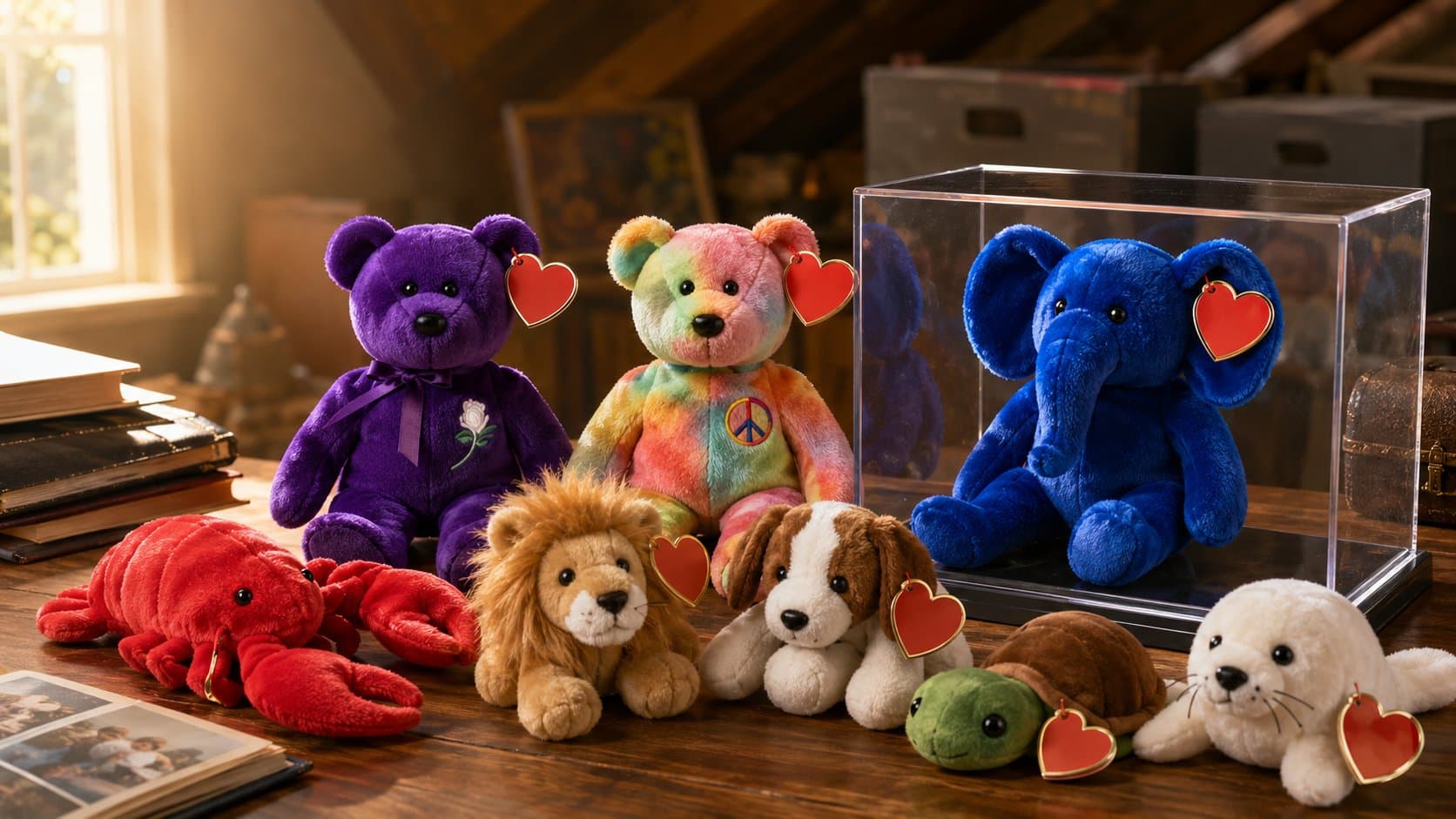
Yes, Beanie Babies are still worth money—but most are not worth a fortune. Common Beanie Babies from the late 1990s typically sell for about $5 to $15, while genuinely rare examples can be worth hundreds or even thousands of dollars. The difference comes down to the exact version, tag generation, condition, rarity, and whether the Beanie Baby can be proven authentic.
That last point matters. Online marketplaces are full of ordinary Beanie Babies listed for $10,000, $100,000, or more. Those are asking prices, not evidence of value. A Beanie Baby is worth what a knowledgeable buyer will actually pay for the same version in comparable condition.
If you have a storage bin full of Beanie Babies, do not throw it out—but do not assume every spelling mistake is a winning lottery ticket, either. Here is how to separate the common plush from the collectible pieces.
How Much Are Beanie Babies Worth Today?
Most collections contain a mix of common, moderately collectible, and occasionally rare Beanie Babies. These broad ranges are a useful starting point:
Type of Beanie Baby
Typical value range
Common late-1990s Beanie, clean and tagged
$5–$15
Common Beanie without its swing tag
Often under $5
Desirable retired version or variation
$20–$100+
Scarce early-generation Beanie in strong condition
$100–$1,000+
Authenticated rarity, prototype, employee exclusive, or exceptional early version
Hundreds to several thousand dollars
These are general ranges, not appraisals. Two Beanie Babies with the same name can have dramatically different values because they were produced in different years, factories, countries, fabrics, colors, or tag generations.
The market also changes. For the most useful estimate, compare your exact Beanie Baby with recent sales and current collector-market data in the BeanieXchange value database.
Why Do Some Beanie Babies Sell for So Much More Than Others?
Collectors do not value a Beanie Baby based on its name alone. They value the complete version: the plush, its swing tag, its tush tag, its production details, its condition, and its authenticity.
- Rarity and production quantity
True scarcity is the biggest driver of value. Early production runs, short-lived variations, prototypes, employee gifts, regional exclusives, and versions that were quickly changed can be difficult to find.
By contrast, many Beanie Babies released near the peak of the craze were produced in enormous quantities. Being old, retired, or stored in a plastic case does not automatically make one rare.
- Tag generation
The heart-shaped paper tag attached near the ear is called the swing tag or hang tag. The fabric label sewn into the plush is the tush tag. Ty changed both tags repeatedly, and collectors use those designs to identify production generations.
Earlier tag generations are generally scarcer and more valuable than later ones. A first-generation version of a character may be worth hundreds of dollars, while a later version of the same character may sell for only a few dollars.
- The exact version or variation
Small production differences can identify an important version. Collectors may examine:
Color and fabric
Face style
Wings, horns, antennae, or other physical features
Country of manufacture
PVC or PE pellet markings
Swing-tag and tush-tag combinations
Embroidery, ribbon, or thread color
These details must be considered together. One isolated feature rarely proves that a Beanie Baby is valuable.
- Condition
Condition can make or break the value of a collectible Beanie Baby. Buyers look for:
A clean, odor-free plush
Bright, unfaded fabric
No stains, holes, repairs, or crushed stuffing
An attached swing tag without creases, writing, tears, or fading
A clean, readable tush tag
For common Beanies, a missing swing tag may leave very little resale value. For rare early generations, an untagged example may still sell, but usually at a steep discount. Ty Collector estimates that many tagless Beanies sell for only a small fraction of the value of an otherwise similar mint-tag example.
- Authentication
Counterfeit Beanie Babies have circulated since the original collecting boom. Rare versions are especially likely to be faked, and an expensive-looking tag alone is not proof.
Professional authentication examines the materials, proportions, stitching, eyes, nose, fabric, fill, swing tag, tush tag, and known production details. A recognized certificate of authenticity gives buyers more confidence and can make a legitimate rarity easier to sell.
If you believe you have an early-generation or high-value version, learn about Beanie Baby authentication and grading before accepting an offer.
Which Beanie Babies Are Actually Worth Money?
No single list can identify every valuable Beanie Baby, because tag generations and variations matter. Still, the following categories deserve a closer look.
Early-generation Beanie Babies
Beanie Babies with first-, second-, and some third-generation swing tags can be significantly more valuable than later mass-produced versions. Early examples of the Original 9 and other first-wave characters are especially collectible when the swing and tush tags match the correct production period.
Rare color or design variations
Famous examples include the royal-blue version of Peanut the elephant and early versions of Quackers produced without wings. Other characters have old-face designs, unusual fabrics, or features that changed during production.
The important word is version. A common light-blue Peanut is not worth the same amount as a genuine royal-blue Peanut, just as a standard Quackers is not automatically the scarce wingless version.
Prototypes, employee exclusives, and limited distributions
Beanies created as samples, given to Ty employees, or distributed in very small quantities can command serious collector interest. Provenance and authentication are crucial because unusual high-value pieces attract counterfeits and misleading claims.
Desirable international and special-event releases
Some country exclusives, event pieces, charity releases, and promotional Beanies have stronger demand than ordinary retail releases. Their value still depends on how many were made and how many collectors want them—not simply the word “exclusive” on a listing.
Exceptional patterns and presentation
Tie-dyed Beanies such as Peace have unique fabric patterns, and particularly attractive examples may bring premiums. However, uniqueness alone does not make every Peace bear rare. Tag generation, colors, condition, and overall collector appeal still determine the price.
Is the Princess Diana Beanie Baby Worth Money?
Princess is collectible, but most Princess Diana Beanie Babies are not worth thousands of dollars.
Ty produced millions of Princess bears after the initial release. Common examples routinely trade at modest prices. Certain tag, pellet, and country-of-origin combinations are scarcer, but sellers frequently misidentify normal production details as rare “errors.”
For example, spacing in the poem, “Oakbrook” on a tag, or the presence of PVC pellets does not by itself create a five-figure collectible. To value Princess correctly, identify the complete swing-tag and tush-tag combination, country of manufacture, pellet marking, and condition. Ty Collector’s detailed Princess version guide is a useful reference for distinguishing real variants from internet myths.
Do Beanie Baby Tag Errors Make Them Valuable?
Usually, no.
Misspellings, punctuation differences, spacing variations, and other tag oddities were often repeated across large production runs. If thousands of identical tags carry the same mistake, the mistake is not rare.
An error may add value when it identifies a genuinely scarce production version that collectors actively seek. It does not transform an otherwise common $5 Beanie Baby into a $5,000 one. Evaluate the whole item, not a list of supposed errors copied from another seller.
How to Find Out What Your Beanie Babies Are Worth
Follow this process before listing, selling, or paying for an appraisal.
Step 1: Identify the exact Beanie Baby
Record the name, style number if present, birthday, country of manufacture, pellet type, physical features, and all text on both tags. Photograph the front and back of the plush, the swing tag inside and out, and both sides of the tush tag.
Step 2: Determine the tag generations
Compare the swing and tush tags with a reliable generation guide. Do not use the copyright year alone as the manufacturing date; the same character may have been produced for several years.
The BeanieXchange rarity guide explains how tags, scarcity, condition, and authenticity work together.
Step 3: Check actual sold prices
Search for the exact version—not just the character’s name. On eBay, filter for completed or sold listings. eBay’s Product Research tool can show sales data for a longer period and may reveal the actual accepted price when a listing ended through Best Offer.
Ignore unsold asking prices. A listing at $50,000 tells you what the seller hopes to receive; a completed sale between informed parties is much stronger evidence.
Step 4: Compare like with like
A fair comparison should match as many details as possible:
Same character and version
Same tag generations
Same country and pellet marking when relevant
Similar plush and tag condition
Similar authentication status
An authenticated mint example is not a fair price comparison for a stained, tagless one.
Step 5: Authenticate promising pieces
Authentication usually makes sense when the expected value comfortably exceeds the cost of the service, when the version is frequently counterfeited, or when a buyer needs proof before paying a premium.
For a common $10 Beanie, professional authentication may cost more than the item is worth. For a suspected royal-blue Peanut, early-generation rarity, or employee exclusive, it can be essential.
Where Can You Sell Beanie Babies?
You can sell Beanie Babies through general marketplaces, local sales, auction houses, collector groups, or dedicated platforms. The best option depends on the item.
Common Beanies often sell more efficiently in themed lots or local bundles because shipping and fees can consume much of the sale price. Rare pieces benefit from detailed photographs, precise version identification, strong buyer protection, and visible authentication.
BeanieXchange is built specifically for collectors to buy, sell, trade, value, and authenticate Beanie Babies. Specialized listings make it easier for buyers to compare the details that actually matter instead of sorting through exaggerated “rare error” claims.
The Bottom Line
Beanie Babies are still worth money, and a small number are worth substantial amounts. But the average late-1990s Beanie Baby is a nostalgic collectible, not a retirement fund.
The pieces most likely to have real value are scarce early generations, legitimate variations, prototypes, employee exclusives, and other limited releases in excellent condition. Clean tags and professional authentication can materially improve buyer confidence. Common tag errors, retirement status, PVC pellets, or an enormous online asking price do not prove rarity.
Before you donate an old collection, inspect both tags and research the exact versions. You may not find a $100,000 bear—but you could find a piece that serious collectors genuinely want.
Frequently Asked Questions
Are Beanie Babies from the 1990s worth anything?
Yes. Most common 1990s Beanie Babies are worth around $5 to $15 when clean and tagged, while scarce early-generation versions and legitimate variations may be worth much more. The year alone does not determine value.
What is the best way to check Beanie Baby value?
Identify the exact version and tag generations, evaluate condition, then compare recent sales of matching examples. Use sold prices rather than active asking prices. For a potentially rare Beanie, get a professional authentication opinion.
Are Beanie Babies worth more with tags?
Usually, yes. An attached swing tag—especially one in mint condition—is important to collectors. A missing or damaged tag can sharply reduce value, although genuinely rare early Beanies may still have a market without one.
Are retired Beanie Babies valuable?
Not automatically. Nearly every older Beanie Baby is retired, including millions of common examples. Retirement matters only when combined with genuine scarcity and collector demand.
Are Beanie Babies with PVC pellets worth more?
Sometimes PVC markings help identify an earlier version, but PVC pellets alone do not make a Beanie Baby rare or valuable. The full combination of tags, country, version, condition, and authenticity matters.
Should I sell Beanie Babies individually or as a collection?
Sell rare, early-generation, or authenticated Beanies individually. Common Beanies are often easier to sell in small themed lots by animal, holiday, color, or collection because buyers can justify the shipping cost.
Can a Beanie Baby without a tag still be valuable?
Yes, but usually much less valuable than the same item with a mint swing tag. Common tagless Beanies may be difficult to sell, while a genuine rare version can retain some value if its identity and authenticity can still be established.